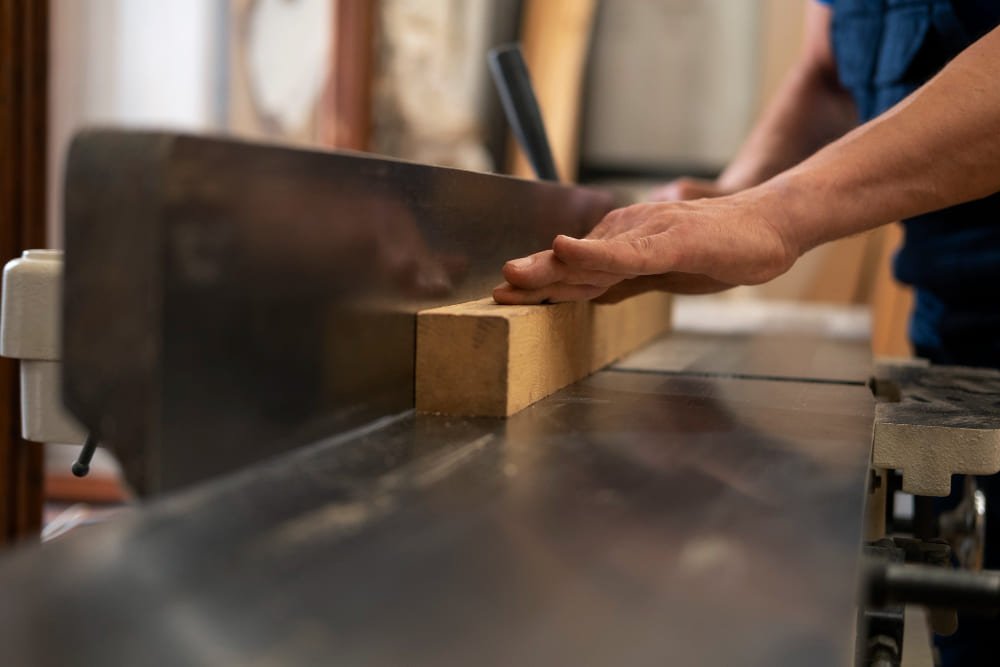
Countertop Fabrication in Boynton Beach, FL: Complete Guide to Custom Stone Countertops
Countertop fabrication is one of the most important stages of any kitchen, bathroom, or custom surface project. Choosing a beautiful slab is only the beginning. The quality of the finished countertop depends heavily on how accurately the material is measured, planned, cut, shaped, polished, transported, and installed.
For homeowners searching for countertop fabrication in Boynton Beach, FL, understanding this process can make it easier to compare countertop fabricators, select the right material, avoid expensive mistakes, and achieve a finished surface that fits the space properly.
Custom countertop fabrication can involve quartz, granite, marble, quartzite, porcelain, and other premium surfaces. Each material behaves differently during fabrication and requires specific techniques, equipment, and experience.
This complete guide explains how countertop fabrication works, what happens from slab selection to installation, how different materials are fabricated, what influences fabrication cost, and what homeowners in Boynton Beach should look for when choosing a countertop fabricator.
What Is Countertop Fabrication?
Countertop fabrication is the process of transforming a slab or manufactured surface into finished countertops designed specifically for a kitchen, bathroom, bar, outdoor area, or commercial space.
The process generally begins after the countertop material and project layout have been selected.
Precise measurements are taken, the slab layout is planned, and the material is cut according to the dimensions of the cabinetry and surrounding space.
Openings for sinks, cooktops, faucets, and other fixtures may be created during fabrication. Exposed countertop edges are shaped and polished according to the selected edge profile.
The completed pieces are then transported to the property for installation.
Fabrication vs Installation
Countertop fabrication and countertop installation are related but separate stages.
Fabrication happens before the finished countertop reaches the kitchen or bathroom. It includes measurements, slab planning, cutting, edge finishing, cutouts, and other preparation.
Installation involves positioning the fabricated pieces on the cabinets or appropriate support structure, joining seams, securing the countertops, and completing necessary finishing.
High-quality installation cannot fully compensate for inaccurate fabrication. Both stages need to be carefully coordinated.
Why Custom Countertop Fabrication Matters
Every kitchen is different.
Walls may not be perfectly straight, cabinet dimensions vary, islands can have unusual shapes, and appliances and sinks require precise openings.
Custom fabrication allows the countertop to be created specifically for the actual space rather than relying on generic dimensions.
Better Fit
Accurate templating and fabrication help the countertop follow the dimensions of the cabinetry and surrounding walls.
This becomes especially important around corners, columns, sinks, cooktops, appliances, and other architectural elements.
Better Design Control
Custom fabrication also provides greater control over how the finished countertop looks.
Homeowners can make decisions about edge profiles, slab orientation, seam placement, overhangs, waterfall panels, and other design details before the material is cut.
Better Use of Premium Stone
Natural stone slabs often contain unique veins, colors, and mineral patterns.
Thoughtful fabrication can position the most attractive areas of a slab in prominent locations such as a kitchen island.
For heavily veined quartzite or marble, slab layout can become an important part of the overall kitchen design.
The Countertop Fabrication Process
Professional countertop fabrication involves several stages. Understanding these steps can help homeowners know what to expect after selecting a material.
Initial Project Consultation
The process generally begins with a discussion about the project.
The homeowner and countertop professional review the kitchen or bathroom layout, preferred material, design goals, edge options, sink type, appliances, backsplash plans, and other relevant details.
Approximate dimensions may be used during this stage to develop an initial estimate.
Preliminary Measurements
Initial measurements can help determine approximate square footage and material requirements.
However, these measurements should not necessarily be treated as the final dimensions used for fabrication.
Final measurements or templates are typically completed after the cabinets and other relevant components are properly positioned.
Selecting the Countertop Material
Material selection influences nearly every stage of fabrication.
Quartz, granite, marble, quartzite, and porcelain have different physical characteristics and design considerations.
Choosing Quartz
Quartz offers consistent manufactured designs and relatively predictable pattern distribution.
It is available in a wide range of colors, including solid surfaces and patterns inspired by natural marble and stone.
Because quartz contains binders such as resins, fabrication and long-term use should follow the manufacturer’s specifications.
Choosing Granite
Granite is natural stone, meaning every slab is unique.
Some slabs contain relatively consistent patterns, while others have dramatic mineral movement.
The actual slab should be reviewed whenever possible before fabrication begins.
Choosing Marble
Marble provides distinctive natural veining and has long been used in premium interior design.
Because marble is calcium-carbonate-based and can be vulnerable to acid etching, homeowners should understand its maintenance characteristics before selecting it for a heavily used kitchen.
Choosing Quartzite
Quartzite is a natural metamorphic stone known for its hardness and distinctive appearance.
Some quartzite slabs feature dramatic movement that makes slab layout particularly important.
Because commercially sold natural stones can vary, homeowners should evaluate the actual slab and discuss its characteristics with knowledgeable professionals.
Choosing Porcelain
Large-format porcelain can create clean contemporary countertops and surfaces.
Porcelain is dense and has low water absorption, but fabrication requires specialized techniques.
Edges, openings, transportation, and installation need careful handling because the material can behave differently from traditional stone slabs.
Countertop Templating and Measurements
Accurate measurements are essential to custom countertop fabrication.
After cabinets are installed and properly positioned, the fabricator can document the final dimensions of the countertop area.
Digital and Physical Templates
Depending on the fabricator and project, measurements may be captured using digital equipment or physical templating methods.
The objective is the same: create an accurate representation of the countertop dimensions and relevant architectural conditions.
Why Cabinets Should Be Ready First
Fabricating countertops before cabinetry is finalized can create fit problems.
Cabinets should generally be properly installed, positioned, leveled, and secured before final templating.
Changes made after measurements can affect the accuracy of the finished countertop.
Slab Layout and Stone Placement
Slab layout is one of the most important parts of custom stone fabrication, especially when working with natural materials.
The fabricator determines how countertop sections will be positioned within the available slab.
Vein Placement
With dramatic marble or quartzite, vein placement can significantly affect the finished design.
A homeowner may want a prominent vein centered on an island or positioned away from certain cutouts.
Planning these details before cutting helps create a more intentional result.
Avoiding Important Features Near Cutouts
Natural stone can contain fissures, mineral deposits, color changes, and other geological characteristics.
Experienced fabricators evaluate the slab before determining the final cutting layout.
Sink and cooktop openings require particular attention because these areas can create narrow sections of material.
Matching Multiple Slabs
Large kitchens may require more than one slab.
When possible, selecting slabs with compatible colors and movement can create a more cohesive appearance.
Bookmatched or sequential slabs may be desirable for certain luxury designs, although availability depends on the stone and supplier.
Cutting the Countertop Slab
Once the measurements and slab layout are finalized, fabrication can begin.
Professional fabrication facilities use specialized cutting equipment appropriate for the material.
Precision is essential because mistakes made during cutting can be difficult or impossible to correct.
Sink Cutouts
The countertop must be fabricated according to the selected sink configuration.
Undermount sinks require a finished opening because the countertop edge around the sink remains visible.
Sink specifications should be confirmed before fabrication.
Cooktop Cutouts
Cooktops also require precise openings based on manufacturer specifications.
The fabricator needs accurate appliance information before the slab is cut.
Changing appliances after fabrication may create significant complications if the new dimensions are different.
Faucet and Accessory Holes
Depending on the project, holes may be required for faucets, soap dispensers, filtered-water faucets, or other accessories.
These details should be discussed before fabrication or drilling is completed.
Countertop Edge Fabrication
After the countertop pieces are cut, exposed edges are finished according to the selected profile.
Edge selection can substantially influence the finished appearance.
Eased Edge
An eased edge creates a clean, mostly straight profile with slightly softened corners.
It is versatile and works with contemporary, transitional, and many traditional kitchens.
Beveled Edge
A beveled edge incorporates an angled section along the perimeter.
It adds subtle architectural detail without becoming highly decorative.
Bullnose Edge
A bullnose creates a softer rounded profile.
Full and partial bullnose variations can be used depending on the material and desired appearance.
Ogee Edge
An ogee profile combines decorative curves and is commonly associated with more traditional or formal kitchens.
It requires more detailed fabrication than a simple eased edge.
Mitered Edge
A mitered edge can create the appearance of a much thicker countertop by joining fabricated pieces at an angle.
This technique is frequently used on contemporary kitchen islands and premium designs.
Precise fabrication and pattern alignment are particularly important when the material contains strong veining.
Countertop Polishing and Finishing
After cutting and edge fabrication, exposed areas must be appropriately finished.
The objective is to create a consistent appearance between the fabricated edge and the primary countertop surface whenever the material and finish allow.
Polished Countertops
Polished surfaces reflect more light and can emphasize color and pattern.
Polished finishes are common across many natural stone and engineered countertop materials.
Honed Countertops
A honed finish has a softer, more matte appearance.
Honed surfaces can create a sophisticated contemporary look, but maintenance characteristics may differ from polished surfaces depending on the material.
Homeowners should understand the specific care requirements before selecting a finish.
Seam Planning in Countertop Fabrication
Not every countertop can be fabricated from a single piece.
Slab dimensions, kitchen layout, transportation restrictions, material characteristics, and structural considerations can make seams necessary.
Where Should Countertop Seams Go?
There is no universal seam location that works for every project.
Seams should be planned according to the countertop layout, material, cabinetry, cutouts, access, and installation requirements.
A good fabricator should discuss significant seam locations before cutting begins.
Can Countertop Seams Be Invisible?
Seams should not automatically be expected to disappear completely.
Professional fabrication and installation can make seams less visually prominent, but visibility depends on the material, color, pattern, seam location, and lighting.
A realistic expectation is a carefully executed seam rather than a guarantee of complete invisibility.
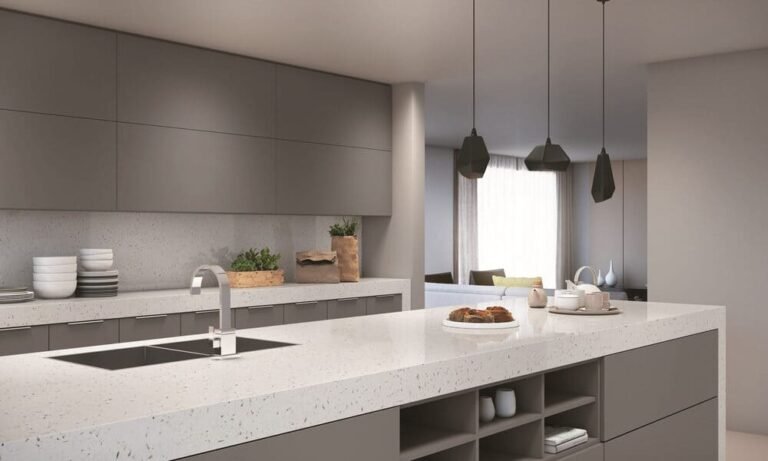
Custom Kitchen Island Fabrication
Kitchen islands often receive more attention during fabrication because they are highly visible.
Large islands may showcase dramatic stone patterns and require careful slab selection.
Oversized Islands
The dimensions of the selected slab can determine whether an island can be fabricated from one piece.
If the island exceeds available slab dimensions, a seam or alternative design strategy may be necessary.
This should be evaluated before the material is purchased.
Waterfall Islands
Waterfall countertops extend the countertop material vertically down one or both sides of an island.
They require additional material and precise fabrication.
When using strongly veined stone, pattern alignment between horizontal and vertical pieces can significantly influence the finished appearance.
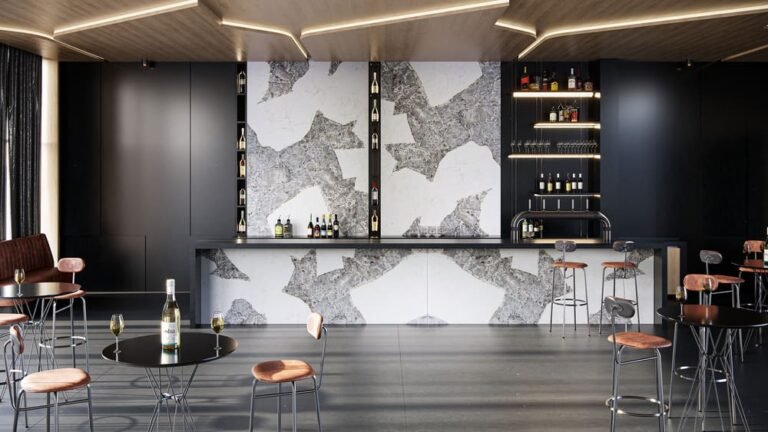
Full-Height Stone Backsplash Fabrication
Instead of installing traditional tile, some homeowners extend quartz or natural stone from the countertop up the wall.
This creates a full-height slab backsplash.
Pattern Alignment
A slab backsplash can be especially dramatic when its veining coordinates with the countertop.
Achieving this appearance requires careful material planning before fabrication.
The additional slab requirements should also be considered when estimating the total project cost.
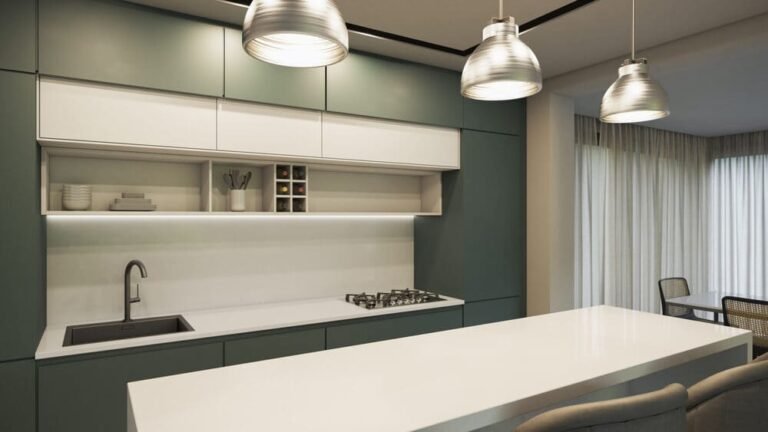
Quartz Countertop Fabrication in Boynton Beach, FL
Quartz fabrication requires precise cutting, edge finishing, cutouts, and seam planning.
Because quartz designs can contain large manufactured veins, layout still matters even though the material is engineered.
Fabricating Marble-Look Quartz
Modern marble-inspired quartz can contain dramatic directional patterns.
Careful planning helps determine how those patterns transition around corners, across islands, and into waterfall panels.
Quartz should also be fabricated and installed according to manufacturer requirements, including recommendations for support, overhangs, and use.
Granite Countertop Fabrication in Boynton Beach, FL
Granite fabrication requires careful consideration of natural variation.
Each slab may contain different colors, veins, mineral concentrations, and other natural characteristics.
Why Viewing the Granite Slab Matters
Choosing granite based only on a small sample can create surprises.
Whenever practical, homeowners should inspect the actual slab that will be fabricated.
This provides an opportunity to evaluate the entire pattern and discuss which areas should appear in prominent locations.
Marble Countertop Fabrication in Boynton Beach, FL
Marble fabrication combines technical precision with careful aesthetic planning.
The natural veining can become an important part of the kitchen design.
Planning Marble Veins
Prominent veins may be positioned intentionally across islands, countertops, backsplashes, or waterfall panels.
For projects using multiple pieces, fabricators can evaluate how transitions will appear before cutting.
Marble should also be handled with an understanding of its natural characteristics and maintenance requirements.
Quartzite Countertop Fabrication in Boynton Beach, FL
Quartzite can be particularly demanding to fabricate because of its hardness.
Professional equipment and experience are important when cutting, shaping, and polishing the material.
Fabricating Dramatic Quartzite
Some quartzites contain striking patterns that make slab layout a central design decision.
Large islands can provide an opportunity to showcase these patterns with minimal interruption.
Before fabrication, homeowners should review proposed seam locations, cutouts, and vein placement.
Porcelain Countertop Fabrication in Boynton Beach, FL
Large-format porcelain requires specialized fabrication techniques.
Although the surface is very hard, the characteristics of porcelain make careful cutting, handling, and edge preparation important.
Mitered Porcelain Edges
Because porcelain slabs can have relatively thin profiles, mitered fabrication is frequently used to create a thicker visual edge.
Executing these details requires precision, particularly when the design contains strong printed veining.
Countertop Fabrication for Outdoor Kitchens
Outdoor kitchens are popular throughout South Florida, but material selection should be based on actual exterior suitability.
Sunlight, rain, temperature changes, installation conditions, and maintenance requirements should all be considered.
Choosing Exterior Countertop Materials
Certain natural stones and porcelain products may be suitable for outdoor applications when properly selected and installed.
Standard indoor engineered quartz should not automatically be assumed appropriate for prolonged exterior UV exposure.
Always verify manufacturer recommendations for the specific material before fabrication.
How Long Does Countertop Fabrication Take?
There is no universal fabrication timeline.
Project size, material availability, fabrication complexity, current production schedules, edge profiles, cutouts, and special design features can all affect completion time.
A simple countertop may require less fabrication than a kitchen containing multiple slabs, waterfall panels, full-height backsplashes, and complex vein matching.
Homeowners should request a project-specific timeline after the material and final scope have been established.
How Much Does Countertop Fabrication Cost in Boynton Beach, FL?
Countertop fabrication costs vary significantly.
The final price may depend on material, square footage, slab quantity, thickness, edge profile, cutouts, seams, finish, project complexity, delivery, and installation.
For this reason, generic online price-per-square-foot figures should be treated only as preliminary references.
Material Selection
Standard quartz or widely available granite can have very different pricing from premium quartz collections, exotic granite, marble, quartzite, or specialized porcelain.
Edge Complexity
Simple edge profiles generally require less fabrication than complex decorative or mitered edges.
Number of Cutouts
Multiple sinks, cooktops, faucets, and other openings increase fabrication requirements.
Waterfalls and Backsplashes
Waterfall panels and full-height slab backsplashes require additional material and fabrication.
Slab Requirements
A project may require purchasing more slab material than the finished countertop square footage suggests.
Slab dimensions, vein orientation, cutouts, and layout can create unavoidable material waste.
What Should Be Included in a Countertop Fabrication Quote?
A countertop estimate should clearly explain the scope of work.
Homeowners should understand whether the quoted price includes material, templating, fabrication, edge finishing, sink cutouts, cooktop openings, delivery, installation, removal of existing countertops, and other services.
Do not assume that every price-per-square-foot quote includes the same items.
Ask About Additional Charges
Discuss specialty edges, additional cutouts, waterfall panels, backsplash fabrication, difficult access, removal, plumbing coordination, and other potential costs before approving the project.
A detailed estimate makes it easier to compare countertop companies accurately.
Common Countertop Fabrication Mistakes
Many countertop problems begin before installation.
Poor planning, inaccurate measurements, inappropriate seam locations, and insufficient attention to slab layout can affect the final result.
Fabricating Before Cabinets Are Ready
Final measurements should reflect the actual installed cabinetry.
Changes after templating can create fit problems.
Ignoring Vein Direction
Cutting dramatic natural stone without considering vein movement can produce visually disconnected sections.
Layout should be reviewed before fabrication whenever pattern placement is important.
Choosing Material Without Considering the Full Slab
Natural stone can vary substantially across a slab.
Selecting from a small sample alone may not provide an accurate representation of the finished countertop.
Changing Fixtures After Fabrication
Changing the sink or cooktop after openings have already been fabricated can create serious problems.
Final fixture specifications should be established before cutting.
How to Choose a Countertop Fabricator in Boynton Beach, FL
Choosing a fabricator should involve more than comparing prices.
Look for professionals who understand the materials you are considering and can explain how your project will move from measurement through installation.
Experience With Your Selected Material
Ask specifically about experience with quartz, granite, marble, quartzite, or porcelain.
A fabricator who works frequently with one material may not necessarily have the same experience with every surface.
Review Previous Work
Completed projects can provide insight into seam quality, edge finishing, sink openings, waterfall fabrication, and pattern alignment.
Pay particular attention to projects using materials similar to yours.
Discuss the Slab Layout
If your material contains significant veining or movement, ask whether you can discuss slab layout before fabrication.
This can be especially important for islands, waterfalls, and full-height backsplashes.
Understand the Complete Estimate
Make sure you know exactly what is included.
Comparing two prices without comparing the complete scope can lead to an inaccurate conclusion about which company offers better value.
Questions to Ask Before Countertop Fabrication Begins
Before your slab is cut, confirm the material, thickness, finish, edge profile, sink model, cooktop dimensions, faucet requirements, overhangs, seam locations, and backsplash plans.
For natural stone, discuss important slab characteristics and vein placement.
For quartz and porcelain, review any relevant manufacturer requirements.
For islands, verify dimensions and support requirements before fabrication.
Making these decisions early reduces the likelihood of expensive changes later.
Countertop Fabricators Near Me in Boynton Beach, FL
Homeowners searching for “countertop fabricators near me” are often looking for more than someone who can cut stone.
A complete countertop project requires communication between material selection, measurements, fabrication, transportation, and installation.
Working with a local countertop professional can make it easier to review materials, discuss design details, evaluate slabs, coordinate measurements, and address questions throughout the project.
For Boynton Beach homeowners, proximity can also make showroom visits and project communication more convenient.
Custom Stone Countertops in Boynton Beach, FL
Custom stone countertops allow homeowners to create surfaces designed specifically for their kitchens, bathrooms, bars, outdoor living areas, and other spaces.
Granite, marble, and quartzite provide authentic natural variation, while quartz and porcelain offer additional design possibilities.
The best material depends on the intended application, desired appearance, maintenance expectations, and budget.
Fabrication then transforms that material into a countertop designed around the actual dimensions and architecture of the property.
Countertop Fabrication for Boynton Beach Kitchen Remodels
Countertops are frequently one component of a larger kitchen renovation.
When cabinetry, flooring, appliances, plumbing, electrical work, and backsplashes are also changing, project sequencing becomes important.
Cabinets generally need to be finalized before countertop templating. Sink and cooktop specifications should be available before fabrication. Backsplash decisions should also be coordinated with countertop thickness and placement.
Planning these elements together can help prevent delays and unnecessary modifications.
Countertop Fabrication in Boynton Beach and Nearby Areas
A local countertop fabricator can serve homeowners not only in Boynton Beach but throughout surrounding Palm Beach County communities.
Projects may include kitchens, bathrooms, custom islands, bars, commercial surfaces, outdoor spaces, and complete countertop replacements.
Our location at 1200 SW 35th Ave Suite D, Boynton Beach, FL 33426 provides a convenient starting point for homeowners considering custom natural stone and quartz countertops in Boynton Beach and surrounding areas such as Delray Beach, Boca Raton, Lake Worth, and nearby South Florida communities.
Why Professional Countertop Fabrication Is Worth It
Premium countertop material represents a significant investment.
Professional fabrication helps ensure that this material is used effectively and fits the project as intended.
Precision measurements, careful slab planning, appropriate equipment, properly finished edges, accurate cutouts, and thoughtful seam placement all contribute to the final result.
The objective is not simply to cut a slab into smaller pieces. Quality fabrication transforms raw material into an architectural surface specifically designed for the home.
Conclusion
Countertop fabrication in Boynton Beach, FL is a critical step in creating custom kitchen, bathroom, and stone surfaces.
The process begins with material selection and accurate measurements before moving into slab layout, cutting, edge fabrication, cutouts, polishing, seam planning, delivery, and installation.
Quartz provides design consistency and low-maintenance performance. Granite offers distinctive natural character. Marble delivers classic elegance. Quartzite combines natural movement with impressive hardness, while porcelain provides contemporary design possibilities and low water absorption.
Regardless of the material, fabrication quality can have a major influence on the finished countertop.
Before approving your project, review the actual material whenever possible, finalize appliances and fixtures, understand seam placement, select the appropriate edge profile, and make sure the complete scope of fabrication and installation is clearly defined.
For homeowners investing in custom stone countertops, choosing experienced professionals is just as important as choosing the slab itself.
Custom Countertop Fabrication in Boynton Beach, FL
If you are planning custom countertops in Boynton Beach, FL, our team can help you explore premium natural stone and quartz options and plan the details of your project.
Visit us at 1200 SW 35th Ave Suite D, Boynton Beach, FL 33426 to discuss your kitchen, bathroom, island, or custom countertop project.
From material selection and precise measurements to custom fabrication and professional installation, we help homeowners and commercial clients throughout Boynton Beach and surrounding South Florida communities create countertops designed around their space, style, and everyday needs.