How to Choose the Perfect Countertop Color for Your Kitchen in Boynton Beach, FL
Choosing the perfect countertop color can completely transform the appearance of your kitchen. While material, durability, and maintenance are important considerations, color has one of the greatest visual impacts because countertops occupy a large portion of the kitchen and directly interact with cabinets, flooring, backsplash, appliances, lighting, and surrounding living spaces.
For homeowners in Boynton Beach, FL, countertop color selection is especially important. South Florida homes often feature bright interiors, abundant natural light, open-concept floor plans, coastal influences, and contemporary architecture. The right countertop can make a kitchen feel brighter, larger, warmer, and more luxurious, while the wrong combination can make even premium materials feel disconnected from the rest of the home.
Whether you are choosing quartz, granite, marble, or quartzite countertops, this guide explains how to select the best countertop color for your kitchen while considering design, lifestyle, maintenance, and long-term home value.
Why Countertop Color Matters in Kitchen Design
Countertops are among the largest uninterrupted surfaces in most kitchens. Because of their size and central position, they can either connect the entire design or create visual conflict.
The right countertop color can help establish contrast, balance different materials, highlight architectural features, and create a cohesive transition between the kitchen and surrounding rooms.
Color can also influence how large or small a kitchen appears. Light surfaces generally reflect more light and can create an open feeling, while darker countertops can provide contrast, depth, and visual drama.
For homeowners remodeling a kitchen in Boynton Beach, choosing a countertop color should therefore be considered part of the overall design strategy rather than an isolated decision.
Start With Your Kitchen Cabinets
Cabinet color is usually one of the most important factors when choosing a countertop.
Because cabinets and countertops meet directly, their colors should complement each other without making the kitchen appear too uniform or excessively busy.
Countertops for White Kitchen Cabinets
White cabinets offer tremendous flexibility because they work with both light and dark countertops.
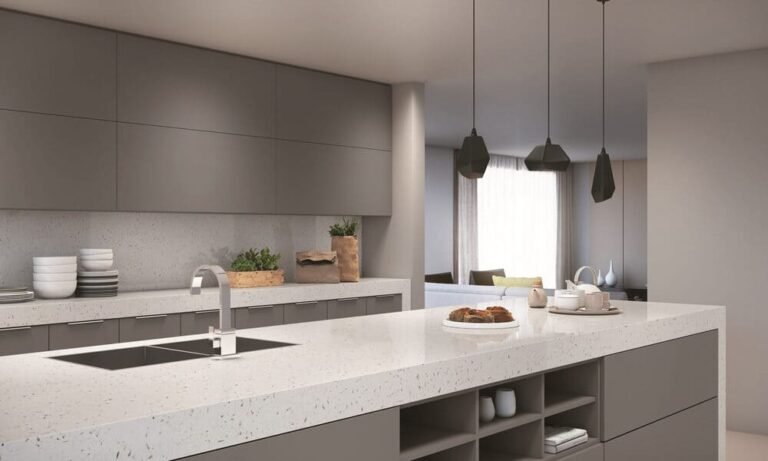
White quartz or quartzite with subtle gray or warm veining can create a bright, sophisticated kitchen. This combination works particularly well in contemporary and coastal-inspired Boynton Beach homes.
Homeowners who want more contrast can pair white cabinets with gray, charcoal, black, or dramatically veined countertops.
A white-on-white kitchen can feel spacious and elegant, while darker countertops create a stronger visual statement.
Countertops for Gray Cabinets
Gray cabinets can work with white, cream, gray, and darker countertop colors depending on the undertone of the cabinetry.
Cool gray cabinets generally coordinate well with white surfaces containing gray veining. Warmer gray cabinetry can pair beautifully with cream, beige, taupe, or warm natural stone.
Avoid selecting a countertop simply because it is also gray. If the undertones conflict, the combination may look mismatched despite belonging to the same general color family.
Countertops for Wood Cabinets
Natural wood cabinetry has returned strongly to kitchen design because it introduces warmth and texture.
Light wood cabinets pair beautifully with white, cream, beige, and softly veined countertops. Darker wood cabinetry can benefit from lighter surfaces that create contrast and prevent the kitchen from feeling visually heavy.
Natural quartzite can be particularly effective with wood cabinets because its organic movement complements the natural grain of the cabinetry.
Countertops for Dark Cabinets
Black, navy, dark gray, and deep wood cabinetry can create sophisticated kitchens, but countertop selection becomes especially important.
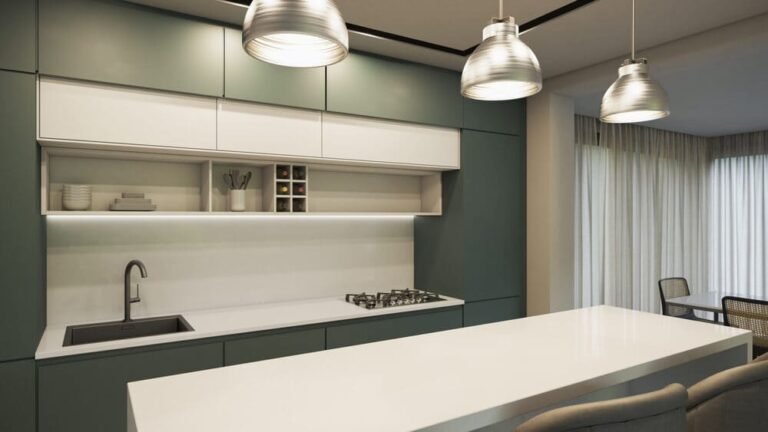
Light countertops are often used to balance dark cabinetry and prevent the space from becoming too visually heavy.
White quartz, light quartzite, and pale natural stones can create dramatic contrast while maintaining a bright atmosphere.
Consider the Amount of Natural Light
Boynton Beach homes often benefit from abundant Florida sunlight, but every kitchen receives light differently.
Before selecting a countertop color, evaluate how much natural light reaches your kitchen throughout the day.
Kitchens With Limited Natural Light
If your kitchen has few windows or receives limited daylight, lighter countertop colors can help reflect available light.
White, cream, beige, and pale gray surfaces can make these kitchens feel more open.
Highly reflective polished finishes may also increase brightness, although the overall effect depends on cabinets, walls, and flooring.
Kitchens With Abundant Natural Light
Kitchens with large windows and significant natural light offer more flexibility.
Homeowners can confidently consider darker countertops, stronger veining, or dramatic natural stone without making the room feel too enclosed.
However, always view stone samples under the actual lighting conditions of your home because sunlight can reveal undertones that may not be visible inside a showroom.
White Countertops for Boynton Beach Kitchens
White remains one of the most popular countertop color families because of its versatility.
White countertops can create a clean, bright appearance that works especially well with South Florida’s coastal and contemporary design styles.
Popular variations include pure white surfaces, warm white, white with gray veining, white with gold veining, and creamy off-white stone.
The advantage of white countertops is their ability to coordinate with almost any cabinet color.
They also provide flexibility if you decide to change paint colors, hardware, lighting, or backsplash materials in the future.
Warm White, Cream, and Beige Countertops
Not every light kitchen needs bright white countertops.
Warm neutrals such as cream, ivory, beige, and soft taupe can create a more inviting atmosphere while maintaining the brightness homeowners want.
These colors pair particularly well with natural wood, warm white cabinetry, brass hardware, beige flooring, and earthy interior palettes.
If your home contains predominantly warm tones, selecting a cold white countertop with blue-gray undertones may create unnecessary visual conflict. A warmer surface can produce a much more cohesive result.
Gray Countertops
Gray countertops remain versatile because they can function as either a neutral background or a contrasting design element.
Light gray surfaces can create subtle contrast with white cabinetry, while charcoal countertops can provide dramatic depth.
When selecting gray countertops, pay close attention to undertones. Some gray stones lean blue or cool, while others contain warmer brown or beige undertones.
Matching those undertones to your cabinetry, flooring, and backsplash can make the kitchen feel intentionally designed.
Dark and Black Countertops
Dark countertops can create a dramatic and luxurious appearance.
Black granite, dark quartz, and deep natural stone surfaces work particularly well in larger kitchens or spaces with abundant natural light.
They can be paired with white cabinetry for high contrast or combined with wood cabinets for a warmer, sophisticated appearance.
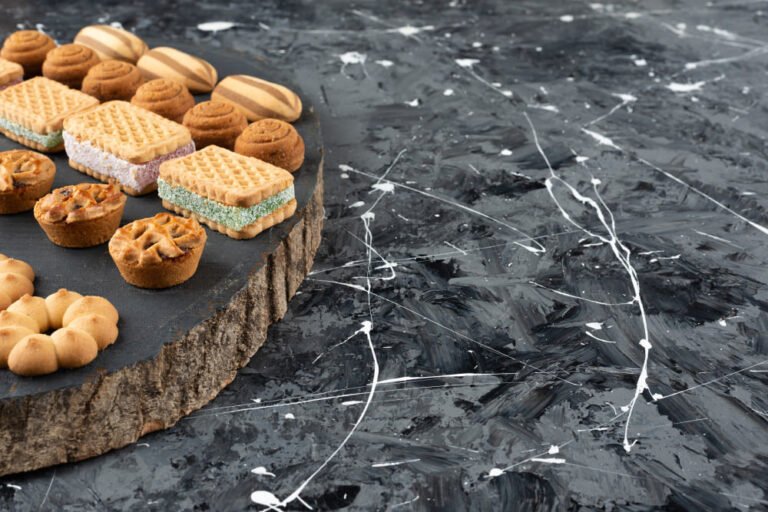
Homeowners should consider maintenance as well as aesthetics. Certain dark polished surfaces can make fingerprints, dust, water spots, and crumbs more visible.
A textured, honed, or leathered finish may help create a softer appearance depending on the material.
Countertops With Dramatic Veining
Color is not the only consideration. The amount and style of veining can completely change how a countertop affects the kitchen.
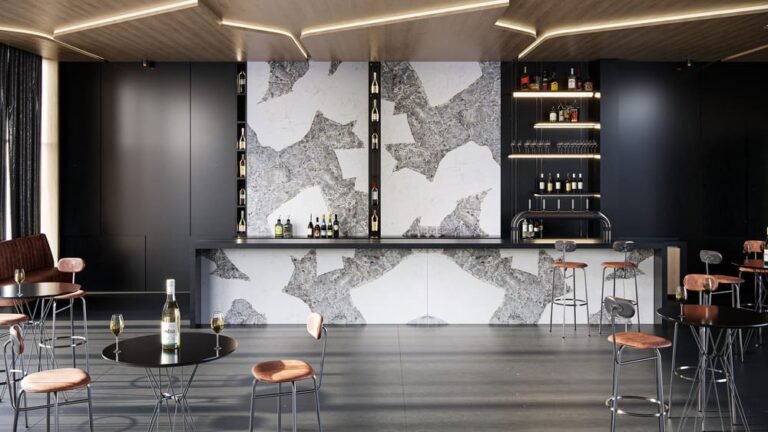
Large natural stone slabs with dramatic veins are increasingly used as focal points.
They work especially well on:
- Large kitchen islands
- Waterfall countertops
- Full-height backsplashes
- Open-concept kitchens
- Luxury custom projects
If the countertop contains strong movement, other design elements may need to remain relatively simple.
Busy countertops combined with heavily patterned flooring, decorative backsplash tile, and elaborate cabinetry can create excessive visual competition.
Match the Countertop With Your Flooring
Flooring occupies an even larger visual area than countertops, making coordination essential.
The countertop and flooring do not need to match exactly. In fact, attempting to match them too closely can make the kitchen feel flat.
Instead, look for complementary undertones.
Warm wood floors usually coordinate beautifully with cream, warm white, beige, and natural stone countertops.
Cool gray flooring may pair better with white, charcoal, or gray-veined surfaces.
If your flooring contains multiple colors, selecting one subtle tone from the floor and repeating it in the countertop can create visual continuity.
Coordinate Your Countertop and Backsplash
Countertops and backsplashes sit directly beside each other, so the relationship between them is important.
One of the easiest approaches is to select the countertop first and choose the backsplash afterward.
Natural stone and heavily veined quartz can already provide substantial visual movement. Pairing these countertops with simple backsplash materials often creates better balance.
Alternatively, homeowners can extend the countertop material vertically to create a full-height backsplash.
Full-Height Stone Backsplashes
Using the same quartz, granite, marble, or quartzite for both the countertop and backsplash creates a seamless, high-end appearance.
This design is especially effective when the stone has distinctive veining.
Careful slab layout allows veins to continue visually across surfaces, turning the stone into an architectural feature rather than simply a countertop.
Choose a Color That Fits Your Kitchen Size
Kitchen dimensions can influence which colors perform best visually.
Smaller kitchens often benefit from lighter countertops because they reflect light and reduce visual heaviness.
Larger kitchens provide greater freedom to experiment with dark colors, dramatic stone, contrasting islands, and bold patterns.
However, size should not be considered independently. Cabinet color, ceiling height, windows, and artificial lighting all influence how countertop colors appear.
Consider a Different Color for the Kitchen Island
Your kitchen island does not necessarily need to use the same countertop as the perimeter cabinets.
Using two complementary surfaces can create visual hierarchy and make the island a focal point.
For example, a homeowner might use subtle white quartz around the perimeter and dramatic quartzite on the island.
Another approach is to keep the countertop material consistent while changing the cabinet color underneath the island.
The goal should be intentional contrast rather than introducing different materials without a clear design relationship.
Quartz Countertop Colors
Quartz provides one of the widest selections of countertop colors because it is engineered.
Popular options for Boynton Beach kitchens include white quartz with subtle veining, warm white surfaces, soft gray patterns, marble-inspired designs, beige tones, and dark contemporary colors.
Quartz is particularly useful when homeowners want predictable color consistency across a large kitchen.
Who Should Choose Quartz?
Quartz is ideal for homeowners who want a controlled design, minimal maintenance, and a wide selection of colors.
It can reproduce the general appearance of natural stone while providing greater pattern consistency.
Granite Countertop Colors
Granite provides extensive natural variation.
Depending on the stone, granite can include white, black, gray, beige, brown, blue, green, gold, and combinations of several colors.
Rather than choosing granite from a small sample, homeowners should ideally view the entire slab.
A small piece cannot fully represent the movement and color variations present across a large natural stone surface.
Who Should Choose Granite?
Granite is an excellent choice for homeowners who appreciate natural variation and want each countertop installation to be unique.
Marble Countertop Colors
White and light marble remain iconic choices for elegant kitchens.
Classic marble often features a white or cream background with gray, gold, or darker veining.
Marble can create a sophisticated appearance, but homeowners should consider its maintenance requirements before selecting it solely for color.
Who Should Choose Marble?
Marble works particularly well for homeowners who prioritize natural elegance and are comfortable with the maintenance and patina associated with the material.
Quartzite Countertop Colors
Quartzite has become especially desirable for luxury kitchens because some varieties combine light backgrounds with dramatic natural veining.
White, cream, gray, beige, and warmer quartzites can complement many popular kitchen styles.
Because quartzite is natural, every slab is different.
Who Should Choose Quartzite?
Quartzite is an excellent option for homeowners seeking distinctive natural stone, premium aesthetics, and strong durability.
For large islands in luxury Boynton Beach kitchens, a carefully selected quartzite slab can become the centerpiece of the entire room.
Should Your Countertop Match Current Trends?
Kitchen trends can provide inspiration, but they should not be the only reason you select a particular color.
Countertops are expensive and designed to last for many years. A highly specific trend may look outdated long before the countertop reaches the end of its useful life.
Timeless neutral colors generally provide greater flexibility.
White, cream, beige, gray, and naturally veined stone can adapt to future changes in cabinetry, hardware, wall colors, and accessories.
Use trends for inspiration while prioritizing a surface that complements the permanent architectural features of your home.
How Countertop Color Can Affect Home Value
There is no single countertop color guaranteed to increase property value.
However, a cohesive, professionally designed kitchen can improve buyer perception.
Neutral colors typically have broad appeal because potential buyers can more easily imagine their furniture and personal style within the home.
Premium materials such as quartz, granite, marble, and quartzite may further strengthen the impression of quality when appropriately selected and professionally installed.
For homeowners planning to sell within the next few years, choosing timeless colors instead of highly personalized designs may appeal to a broader group of buyers.
Common Countertop Color Mistakes to Avoid
One common mistake is selecting a countertop independently from the rest of the kitchen.
A beautiful slab in a showroom may not necessarily complement your cabinets, flooring, or lighting.
Another mistake is evaluating color under only artificial showroom lighting. Materials can look significantly different when exposed to natural Florida sunlight.
Homeowners should also avoid combining too many strong patterns. If the countertop has dramatic veining, consider simplifying the backsplash and other nearby surfaces.
Finally, do not prioritize color while ignoring material performance. The ideal countertop should satisfy both aesthetic and practical requirements.
How to Test Countertop Colors Before Making a Decision
Never rely entirely on online photographs when selecting countertops.
Computer and smartphone screens can display colors differently, and lighting dramatically affects how surfaces appear.
Whenever possible, compare physical samples with your cabinets, flooring, backsplash, and paint colors.
For natural stone, viewing the full slab is particularly important.
View Samples at Different Times of Day
Look at potential countertop colors during the morning, afternoon, and evening.
Natural daylight may reveal warm or cool undertones that were not obvious under artificial lighting.
Also evaluate the surface using your kitchen’s nighttime lighting.
A countertop should complement your kitchen under both natural and artificial light.
Why Slab Selection Matters for Natural Stone
When purchasing granite, marble, or quartzite, choosing the actual slab is an important part of the process.
Natural stone contains variations that cannot be completely represented by catalog images or small samples.
Viewing the complete slab allows you to evaluate:
- Overall color
- Vein direction
- Pattern movement
- Natural variations
- Areas you want featured
- Areas that may affect fabrication
For statement kitchen islands, slab selection becomes even more important because the countertop may serve as the main visual feature of the room.
Work With an Experienced Countertop Professional
Professional guidance can simplify countertop color selection.
An experienced countertop specialist can help evaluate how different materials interact with cabinetry, flooring, lighting, and the overall architecture of your kitchen.
They can also explain how slab layout, seams, edge profiles, and fabrication affect the finished appearance.
This is especially valuable when working with natural stone because the position of individual veins can influence the final design.
Choosing Kitchen Countertops in Boynton Beach, FL
Boynton Beach homeowners have access to a wide range of quartz and natural stone surfaces for kitchens of every style.
When selecting a countertop color, consider more than what looks attractive in isolation. Evaluate your cabinets, floors, backsplash, natural light, artificial lighting, kitchen size, lifestyle, and long-term design goals together.
South Florida’s bright environment makes light neutrals and natural stone particularly versatile, but darker and more dramatic surfaces can also create exceptional kitchens when used thoughtfully.
The best countertop color is ultimately the one that creates balance throughout the entire room while providing the durability and maintenance level your household needs.
Conclusion
Choosing the perfect countertop color for your kitchen in Boynton Beach, FL requires balancing aesthetics, functionality, and long-term value.
White and light countertops can create bright, open spaces that complement South Florida interiors. Warm neutrals work beautifully with wood and earthy finishes, while gray surfaces offer versatility. Dark countertops create sophisticated contrast, and dramatically veined natural stone can transform an island into an architectural focal point.
The material matters just as much as the color. Quartz offers consistency and low maintenance, granite provides distinctive natural patterns, marble delivers timeless elegance, and quartzite combines dramatic natural beauty with impressive durability.
Before making your final decision, compare physical samples, evaluate the complete kitchen palette, and view natural stone slabs whenever possible. A carefully selected countertop should complement your home today while remaining attractive for many years.
Find the Perfect Kitchen Countertop in Boynton Beach, FL
If you are searching for kitchen countertops in Boynton Beach, FL, our team can help you compare colors, materials, patterns, finishes, and natural stone slabs to find the right option for your project.
Located at 1200 SW 35th Ave Suite D, Boynton Beach, FL 33426, we specialize in premium natural stone and quartz surfaces for residential and commercial projects throughout Boynton Beach and surrounding areas.
From material selection and custom fabrication to professional installation, we can help you create a kitchen countertop that complements your cabinets, enhances your interior design, and provides lasting beauty and functionality.